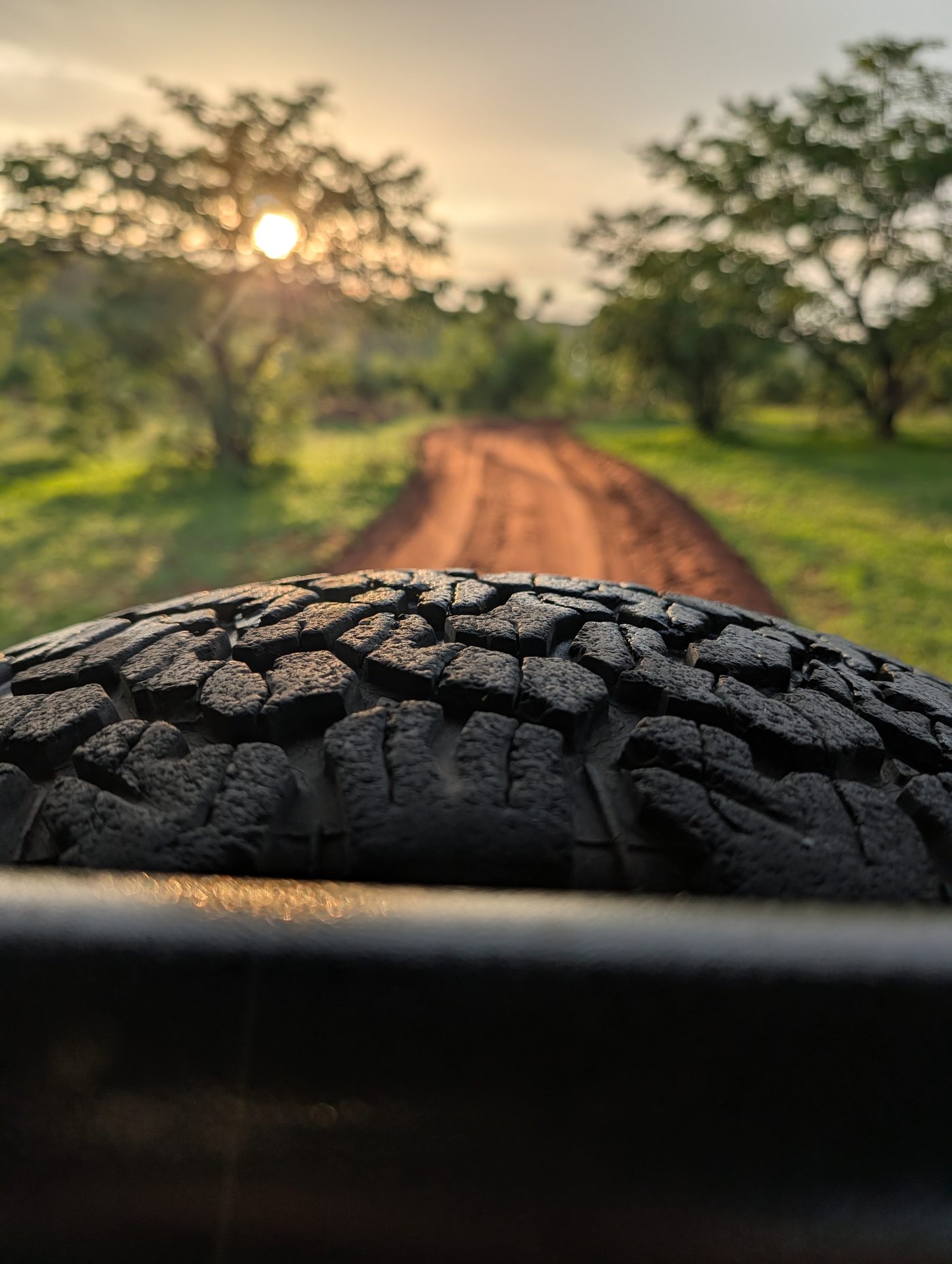
I am sharing these notes a bit late, looking back now at a trip I took in December 2025. There is something transformative about trading the end-of-year rush for four weeks across Southern Africa. It begins with the dread of a sixteen-hour flight from Washington DC. Sitting on the tarmac at Dulles, you brace for an exhausting long haul across the Atlantic, but the flight was surprisingly smooth: a good book, a couple of movies, a long sleep, and before you know it, the dramatic peaks of the Western Cape appear below the wings.
I touched down in Cape Town on a gusty, windswept day, the legendary Atlantic wind howling across the tarmac. Over four weeks, I traveled across four countries: South Africa, Zimbabwe, Botswana, and Namibia. Thousands of kilometers across landscapes that force you to slow down, look up, and listen: from cold coastal mists and roaring waterfalls to quiet river channels, desert oases, and deep crimson sand dunes that feel like the edge of the earth.
When you pack for a month-long expedition across four border crossings, being able to vacuum seal your clothes is an essential hack for optimizing limited luggage space. Beyond the packing logistics, you quickly learn that travel is not about controlling every hour. It is about embracing the wind, the dust, the long drives, cold drinks at sundown, and spontaneous conversations along the way. In other words: I set out with a loose plan and an open mind. What I found was a region of raw beauty, extraordinary wildlife encounters, world-class wine, and people whose generosity made me feel at home wherever I pulled over.
Cape Town: Wind, Fog, and Familiar Shores
Arriving in Cape Town on that windy December day, stepping out of the airport triggered an immediate, powerful wave of nostalgia. Having lived in San Francisco for years, Cape Town hit me with a striking geographic kinship.
The resemblance is uncanny: steep mountain slopes plunging directly into crashing ocean waves, rolls of sea fog sweeping over the bay, Table Mountain brooding over the city skyline like a wilder, majestic version of Twin Peaks, and distinct microclimates around every bend.
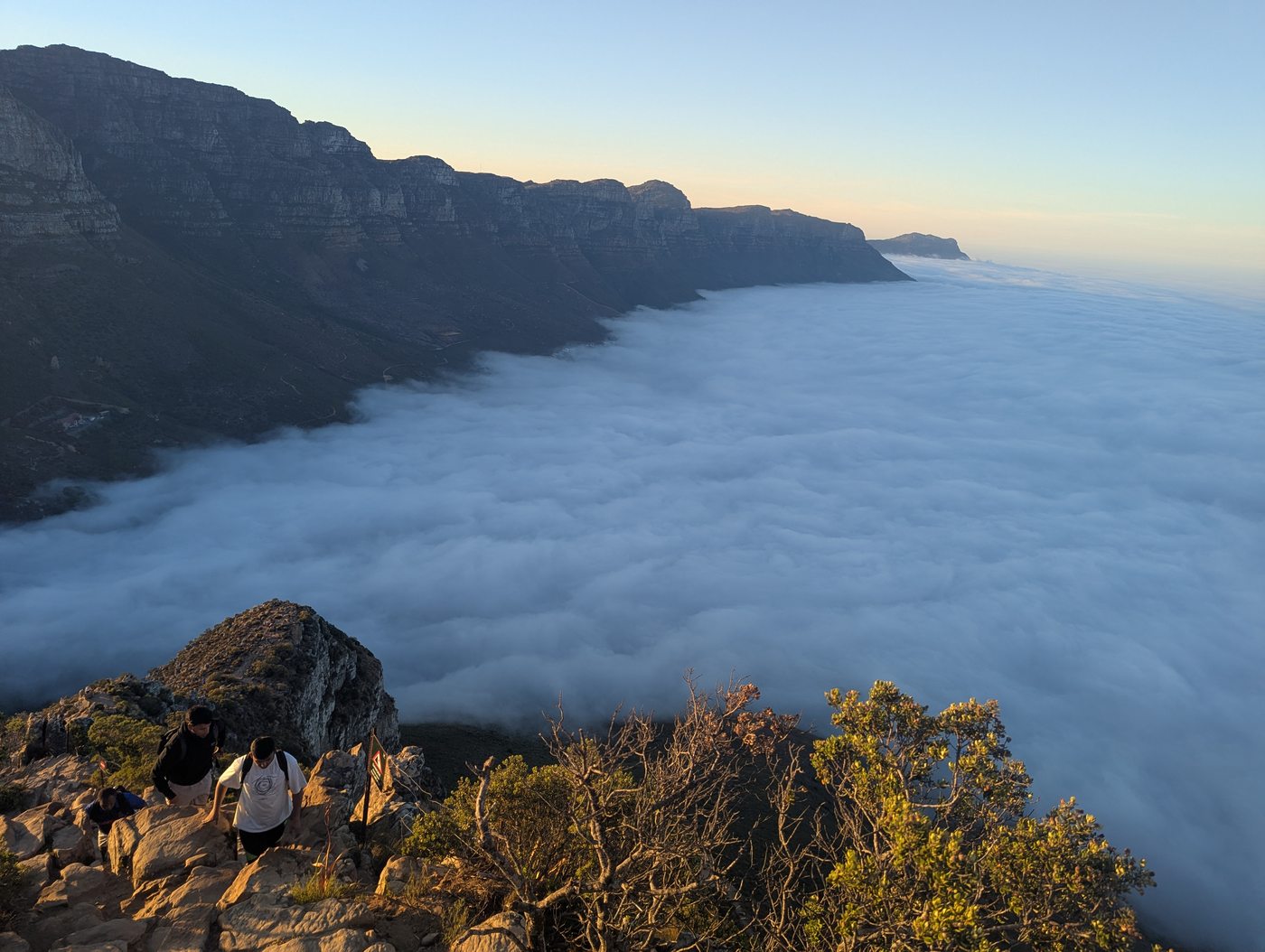
Cape Town combines natural drama with extraordinary food and culture. I spent my first days driving down the Cape Peninsula along Chapman's Peak Drive and visiting the penguin colony at Boulders Beach. Watching the penguins waddle along the sand up close is unforgettable, though nobody warns you about the distinctive, pungent smell that hangs over the colony on a warm afternoon.
From the coast, I spent a day wandering through Kirstenbosch National Botanical Garden before heading into the winelands of Franschhoek and Stellenbosch. Sitting outside under ancient oak trees at historic wine estates, sipping world-class Pinotage and Chenin Blanc under the bright summer sun, it turned out to be the absolute perfect day to get sunburned. Throughout South Africa, the people were super friendly, welcoming me with genuine warmth from day one.
Johannesburg: Highveld Energy and Braai
From the Cape, I traveled up to Johannesburg. I only had a single day in Joburg, but the city has a raw, electric pulse and a deep history. It is unpretentious, complex, and full of life.
Knowing a local contact in the city made navigating my one day in Joburg substantially easier, giving me an insider perspective beyond standard tourist routes. I spent part of the afternoon exploring the Mall of Africa, which turned out to be surprisingly beautiful with its sleek, sweeping design and lively public spaces. The one thing I wished I had caught was a live stand-up show from Trevor Noah. Having watched him for years on The Daily Show, seeing him perform live in his home country would have been incredible.

Spending my single day in Joburg was an essential grounding experience. Sitting down for an authentic South African braai, sharing cold lagers, and listening to locals talk about food, music, and politics gave me a deeper appreciation for contemporary South African culture before I headed north across the border.
The Thunder of Victoria Falls
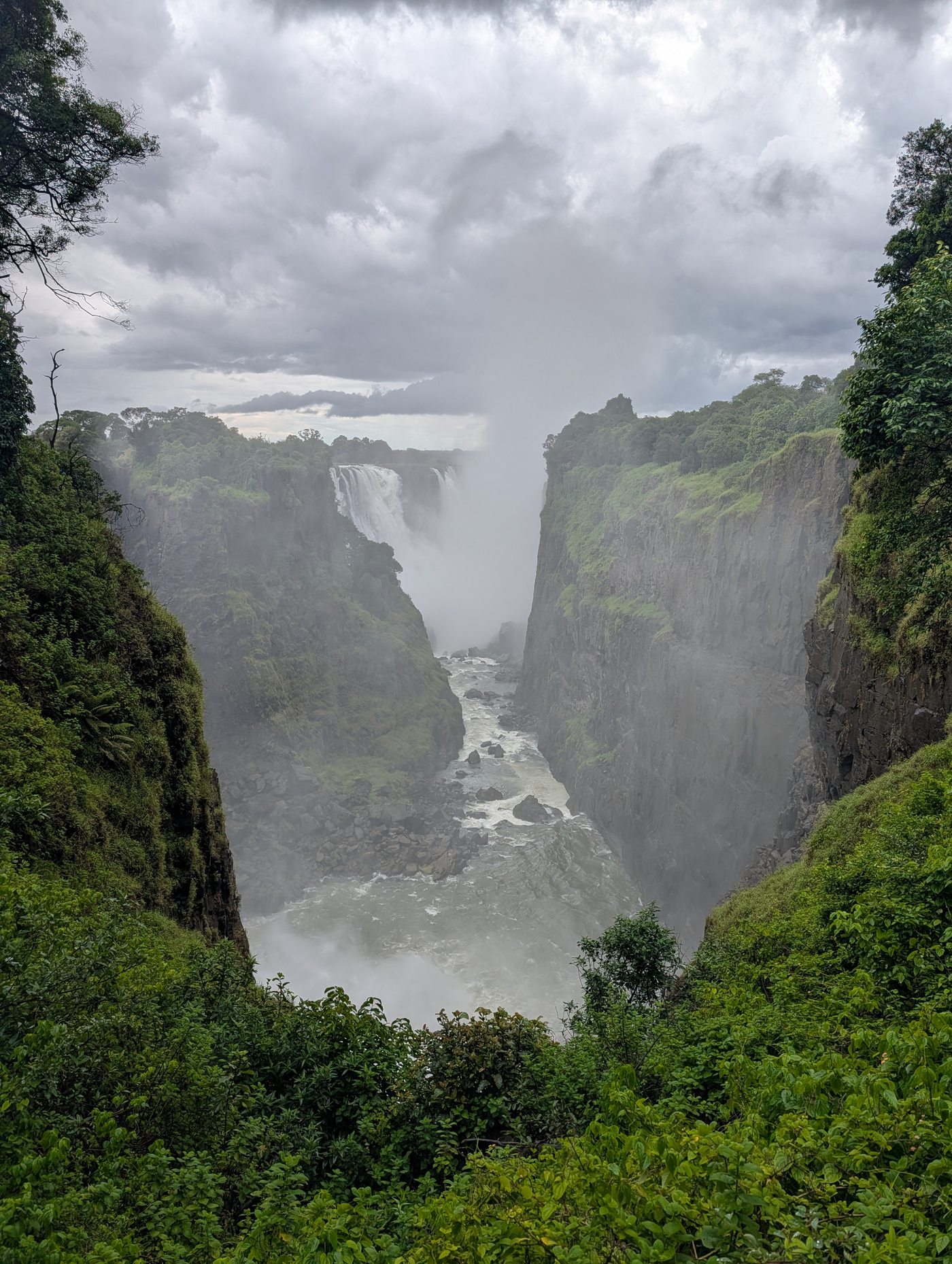
Flying into Zimbabwe to see Victoria Falls, you hear the river long before you see it. The locals call it Mosi-oa-Tunya: "The Smoke That Thunders."
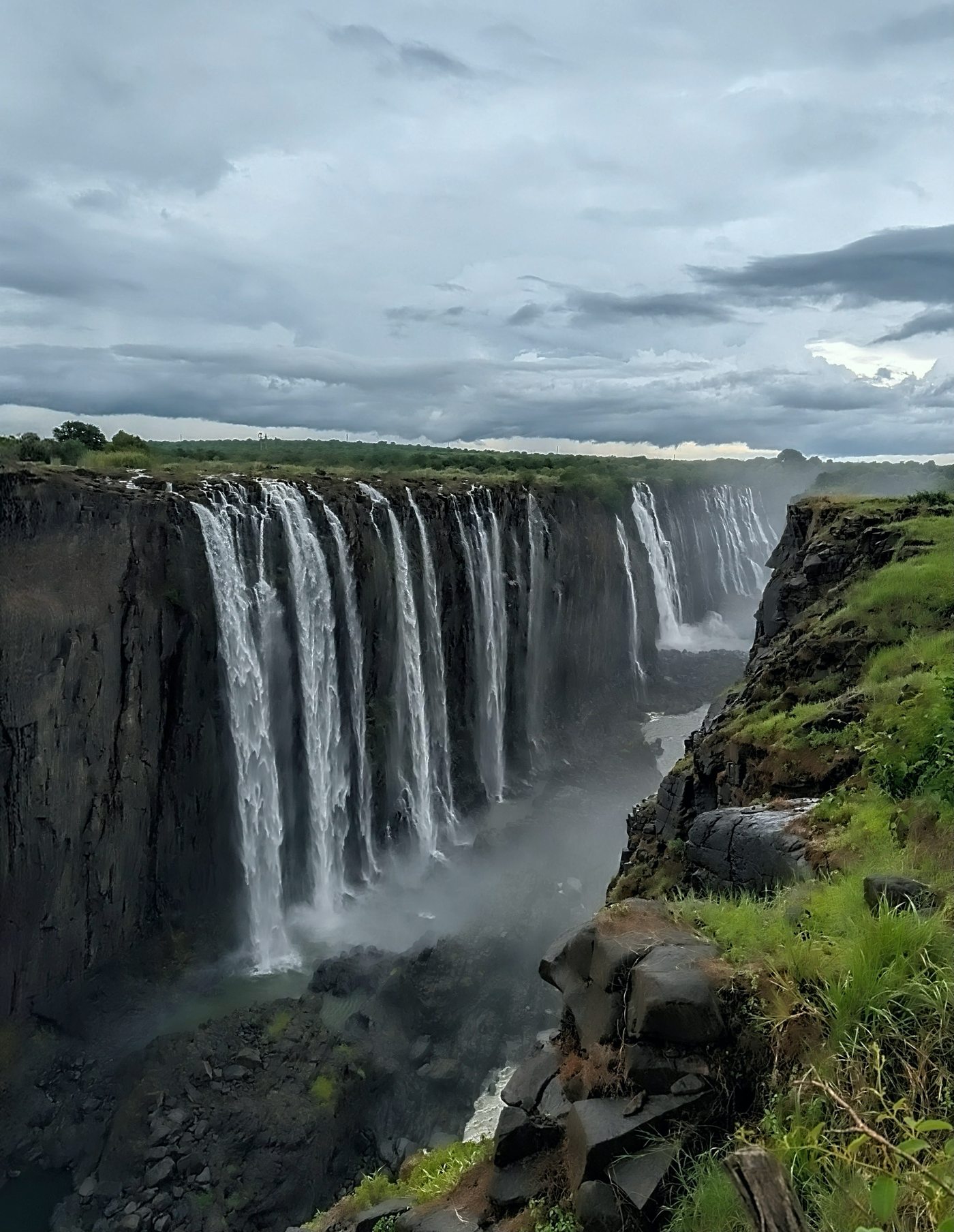
Walking along the rainforest path opposite the precipice, the sheer power of the water hitting the Batoka Gorge is humbling. For instance: standing on the rocky outlook drenching your clothes in warm spray as rainbows slice through the rising mist is the kind of experience that stops your thoughts in their tracks. It is water and earth at their most primal.

Chobe and the Okavango: Wildlife on River Time
From Zimbabwe, I crossed into northern Botswana to explore Chobe National Park and the Okavango Delta. Botswana treats conservation with deep respect, and it shows in every mile of pristine bushland.
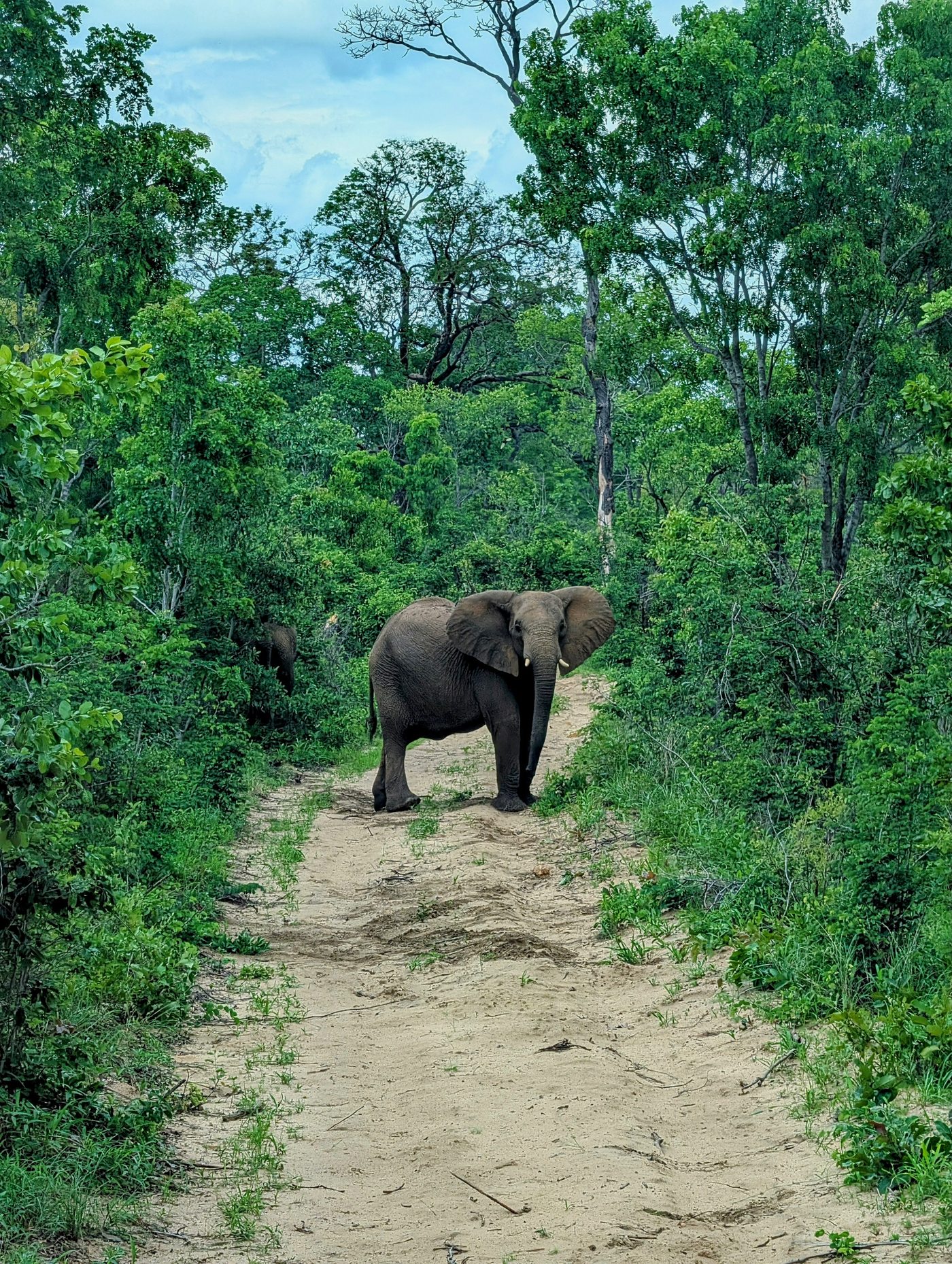
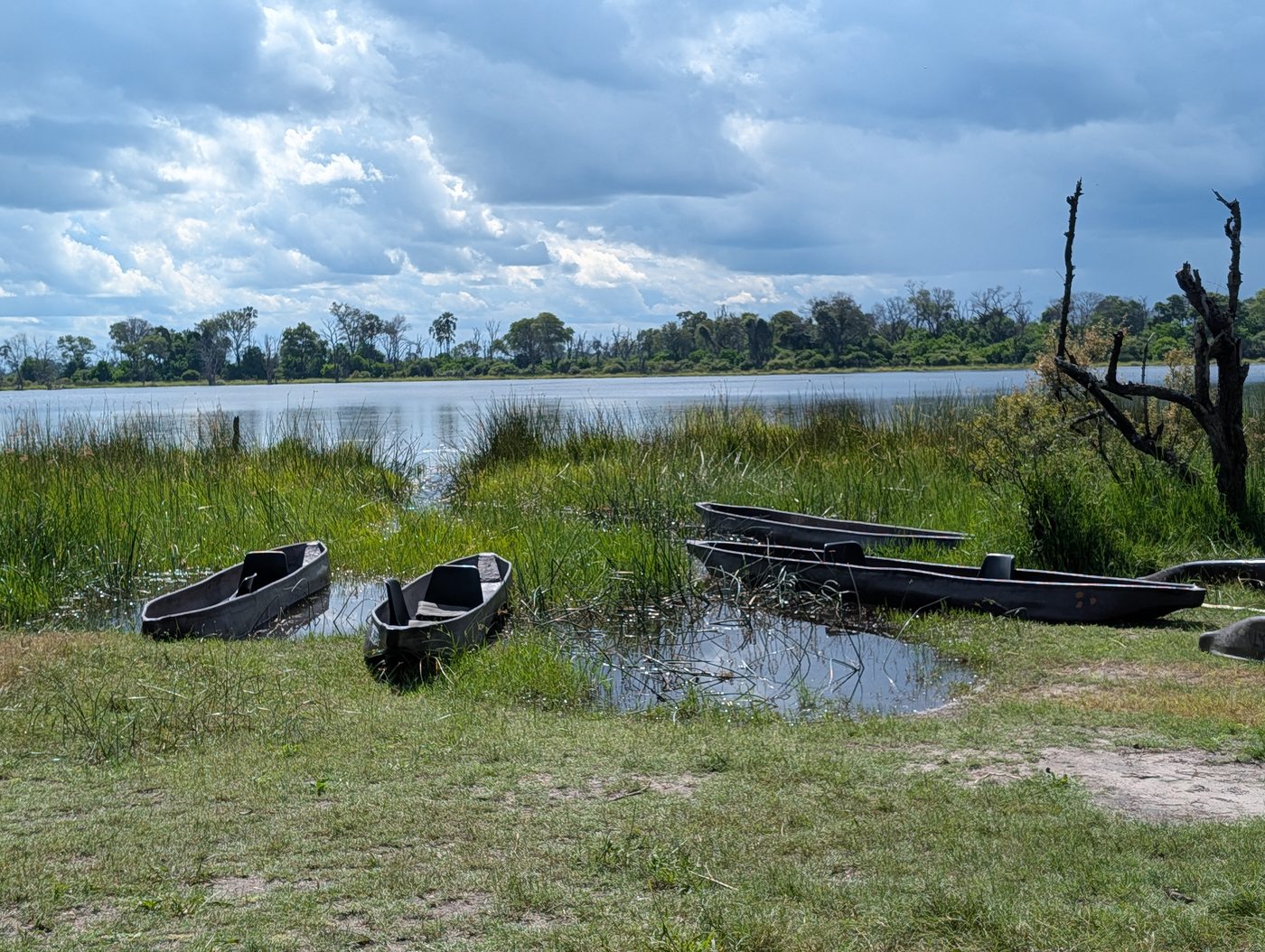
Deep in the Okavango Delta, more than two hours inland by boat and far from any hotels, I pushed deep into the wild backcountry. The traditional dugout canoes used here are called mokoros. Gliding silently along narrow water channels framed by tall papyrus reeds, you get impossibly close to the wild: massive herds of elephants wading into the river channels, using their trunks like snorkels while hippos grunt in the shallows.
Out here, camping at night means being completely surrounded by untamed nature. In fact, I had wild hippos roaming right through my campground after dark. Out on the water, my guides shared a few eye-opening stories about previous tourists who made questionable decisions around angry elephants. I will skip the wilder details, but the core takeaway is clear: dress accordingly, respect the wildlife, and whatever you do, do not run. In other words, as the movie title puts it: Good Luck, Have Fun, Don't Die.
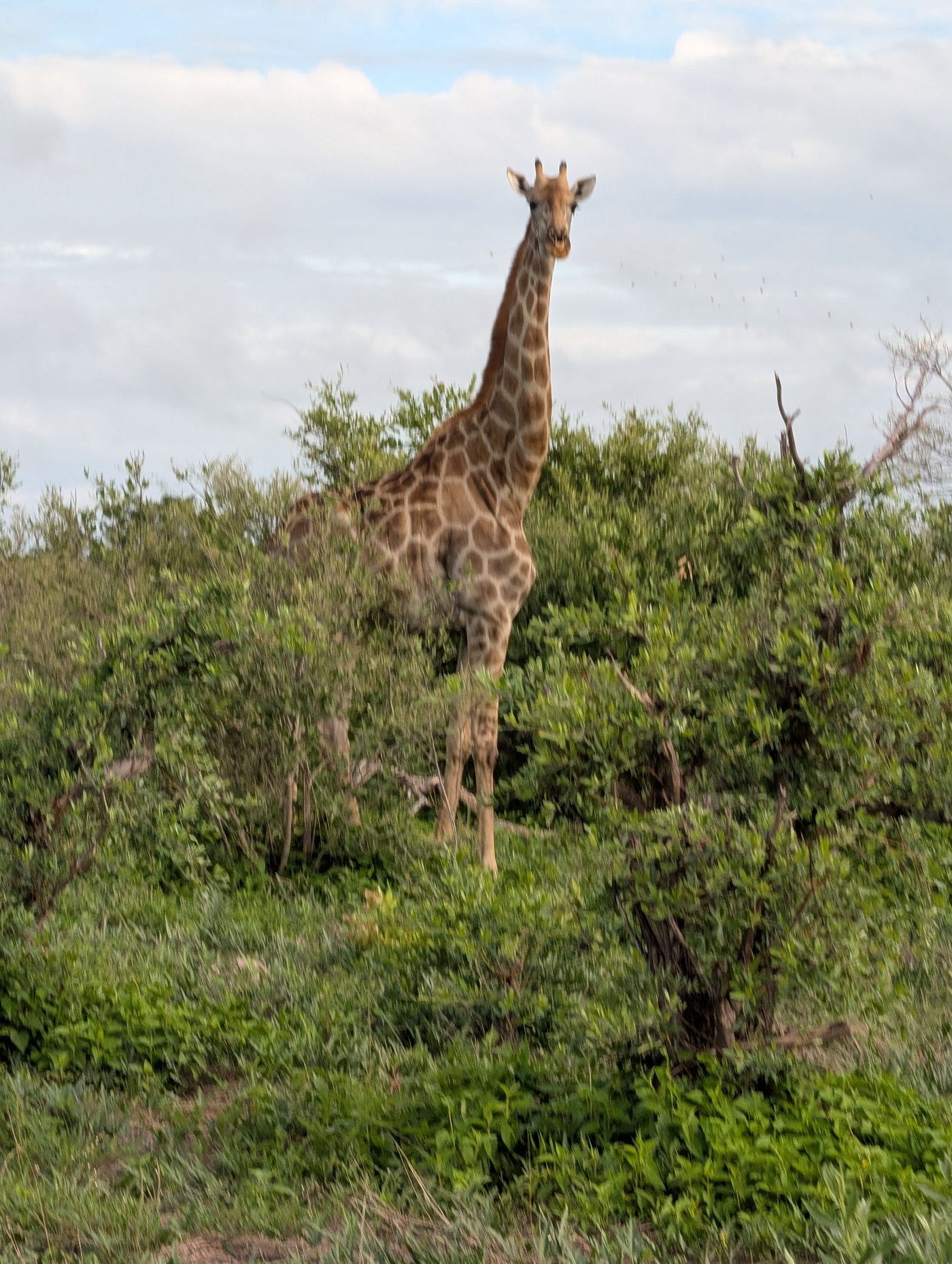
Etosha: The Quiet Drama of the Natural Basin
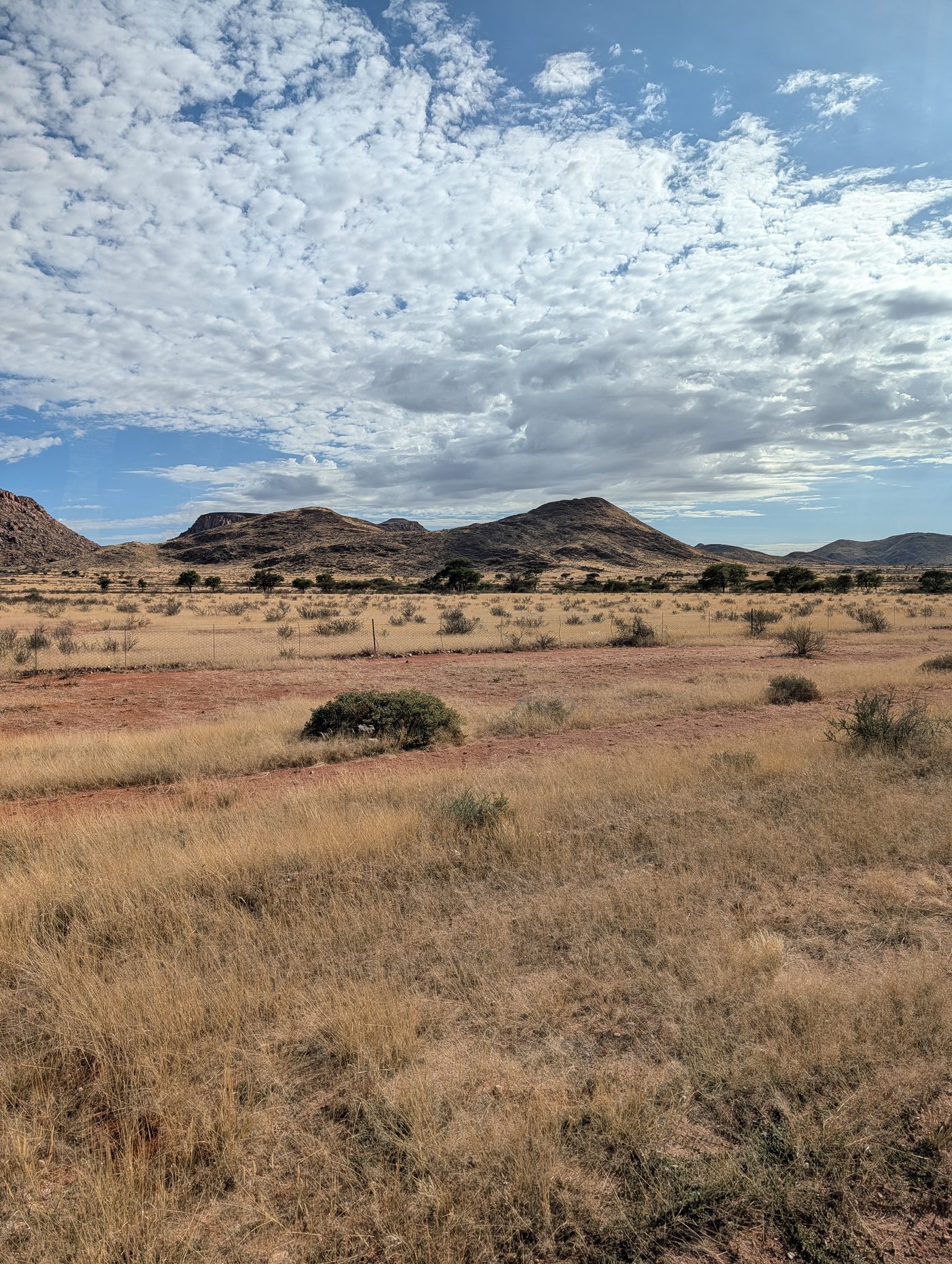
Driving west into Namibia, the lush green waterways gave way to the vast, sun-bleached expanse of Etosha National Park. At the center of the park lies the Etosha Pan: a giant, blinding white salt flat stretching out to the horizon.
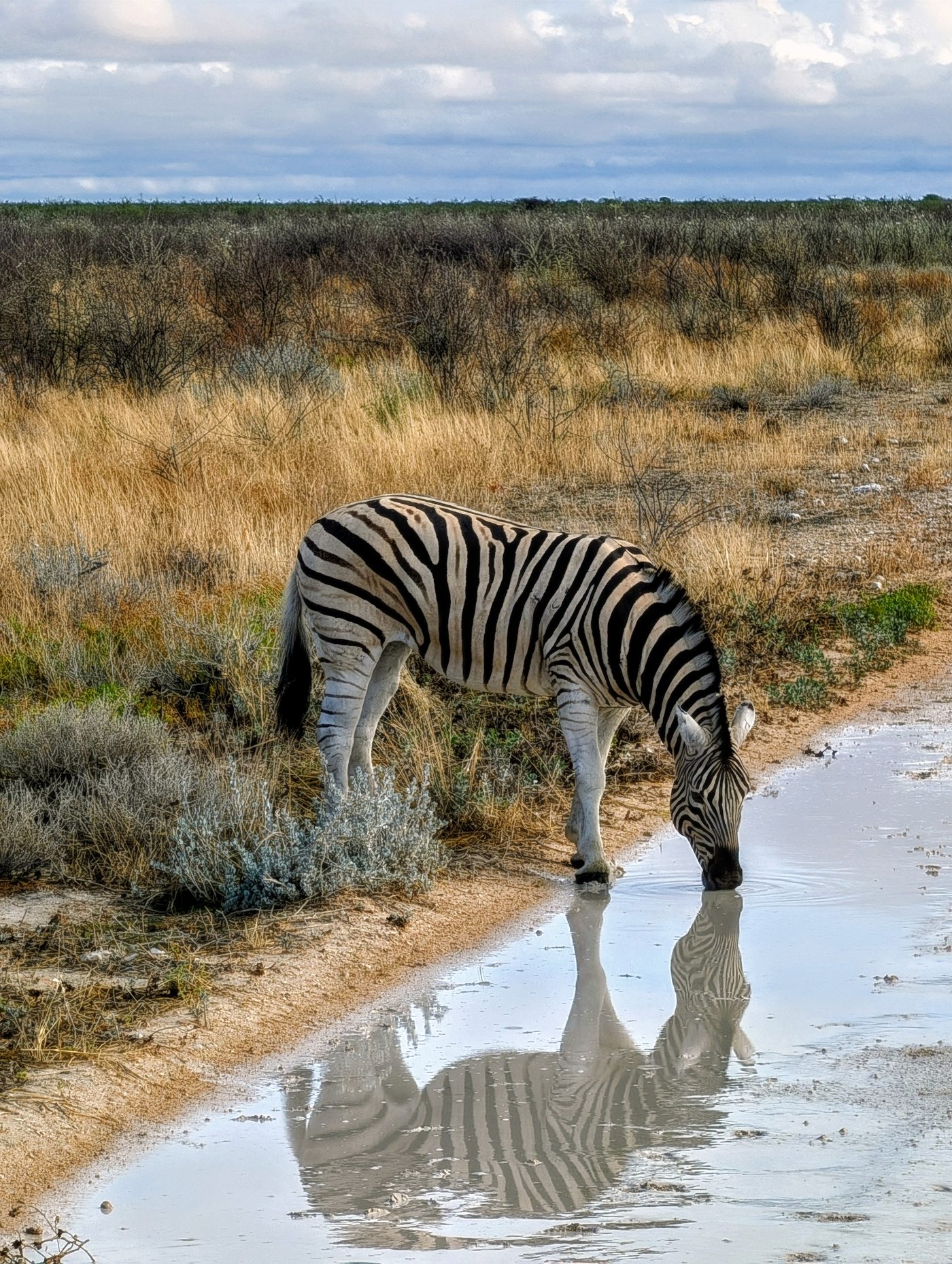
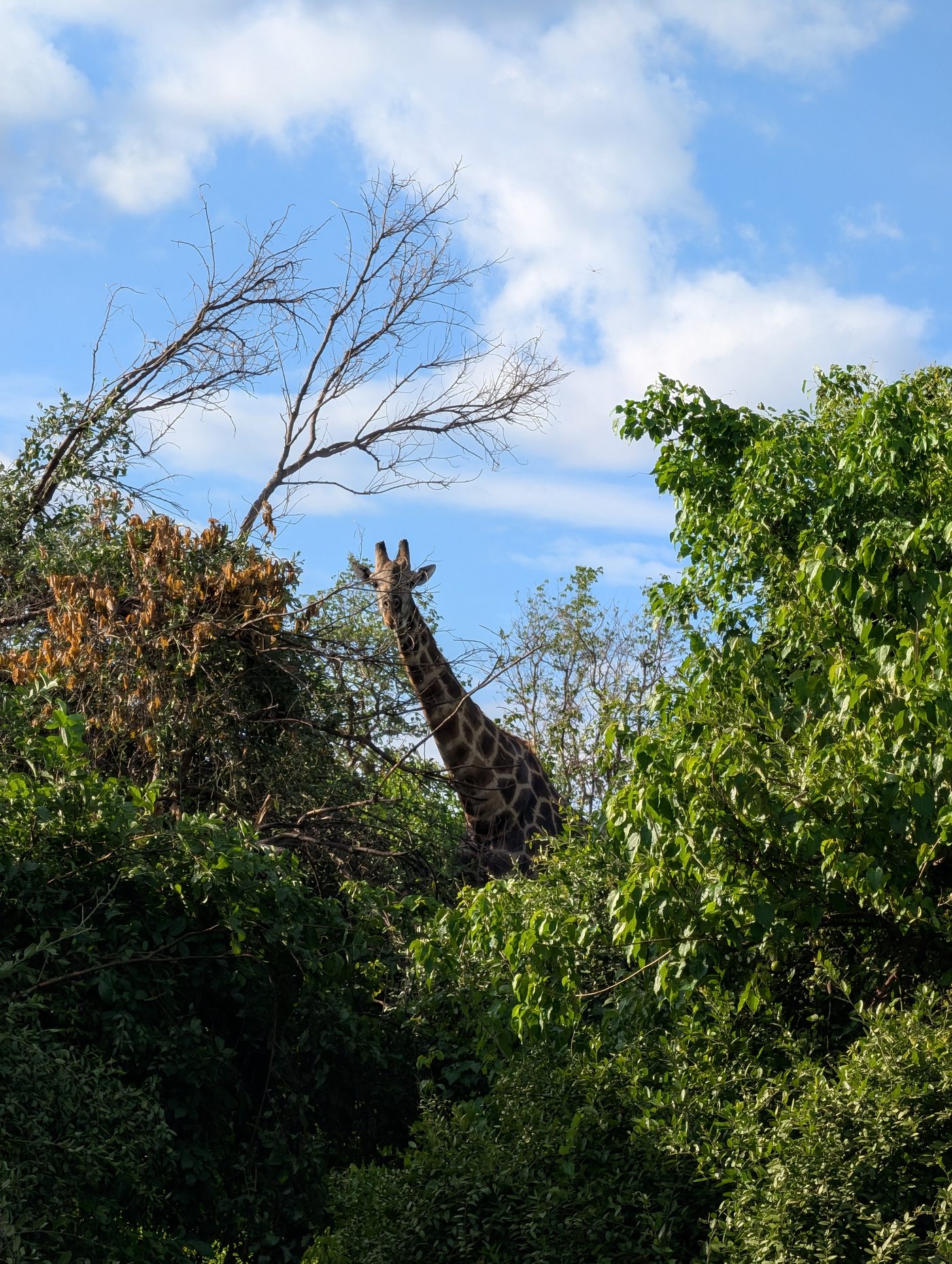
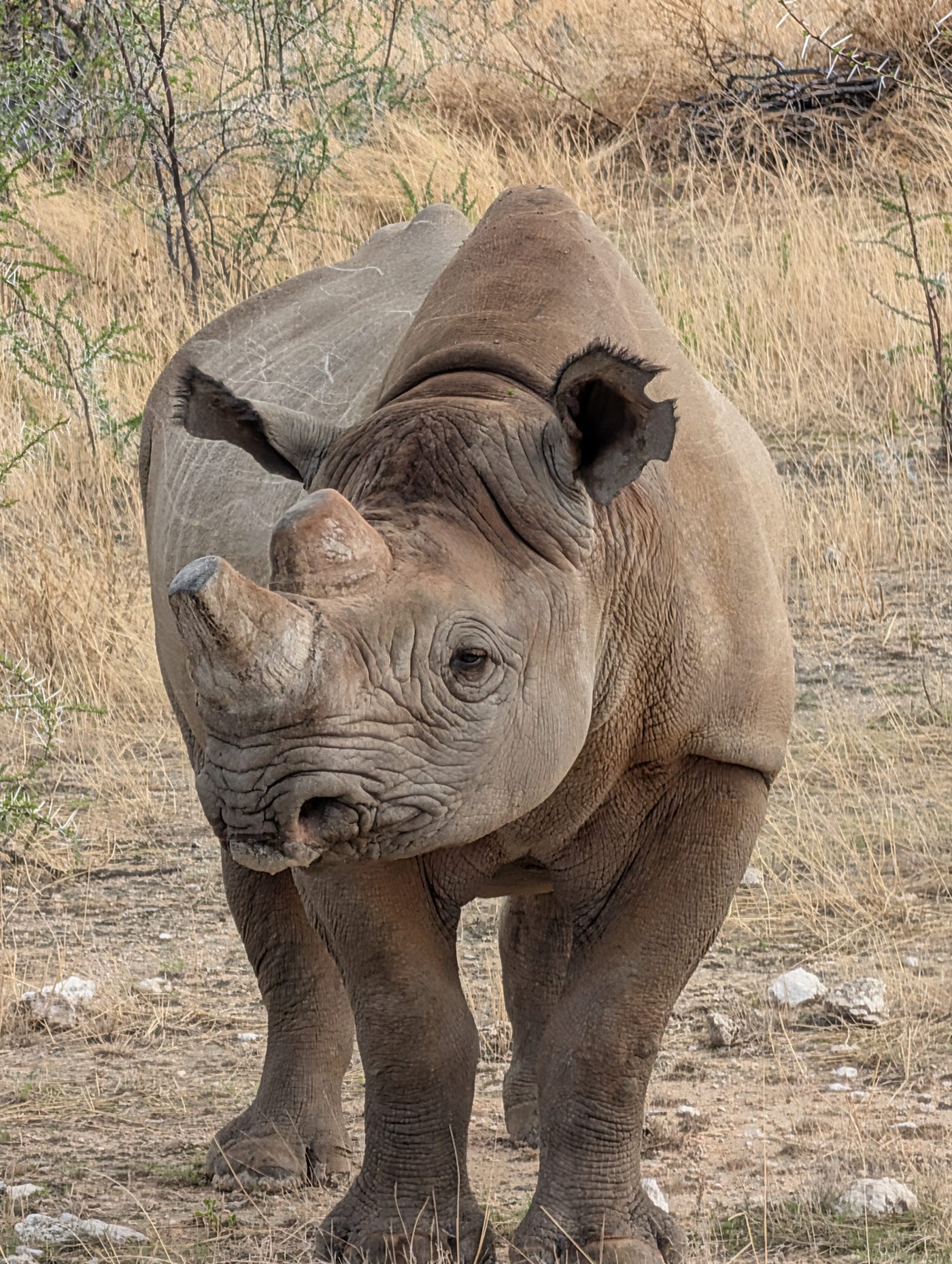
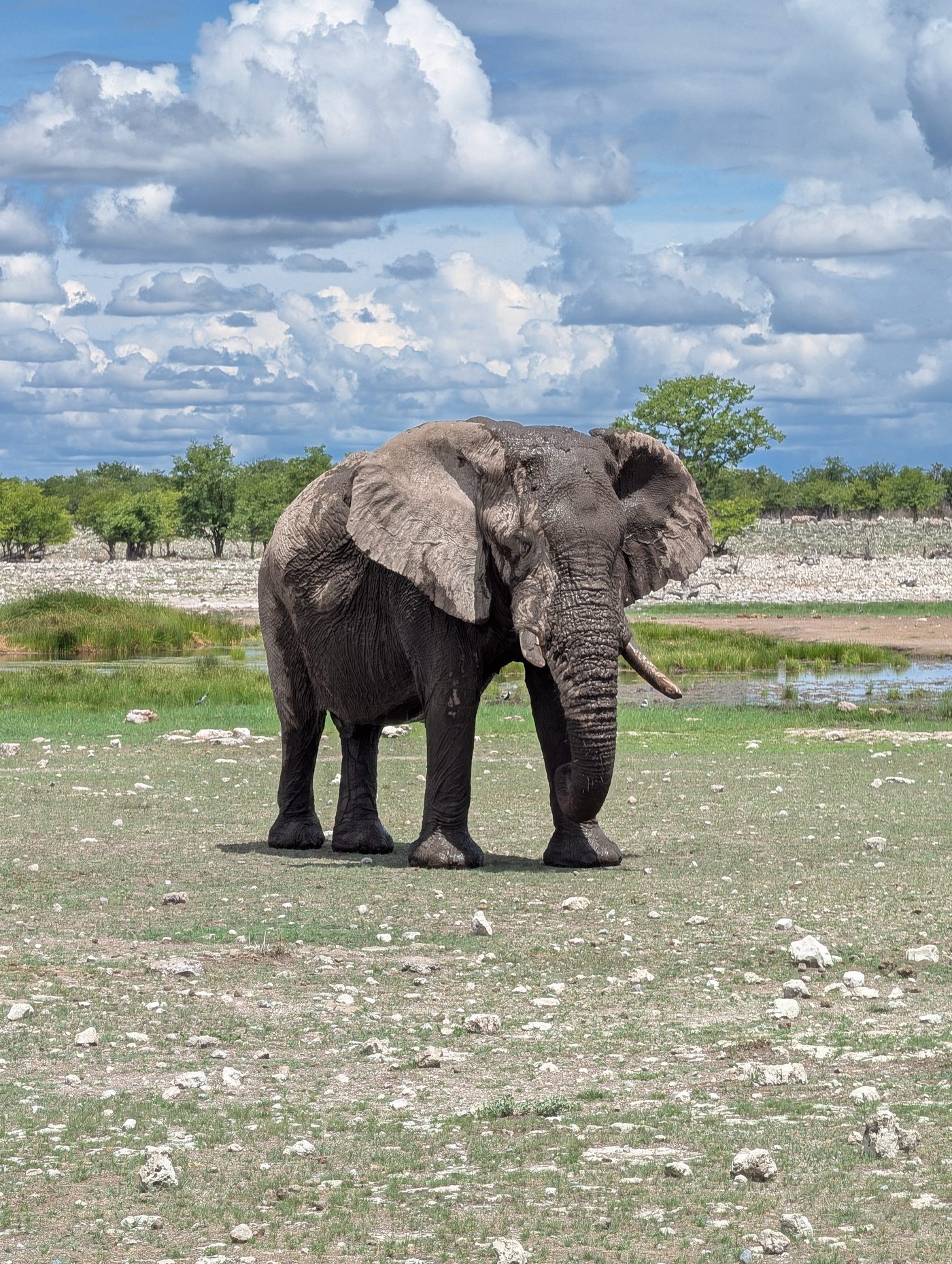
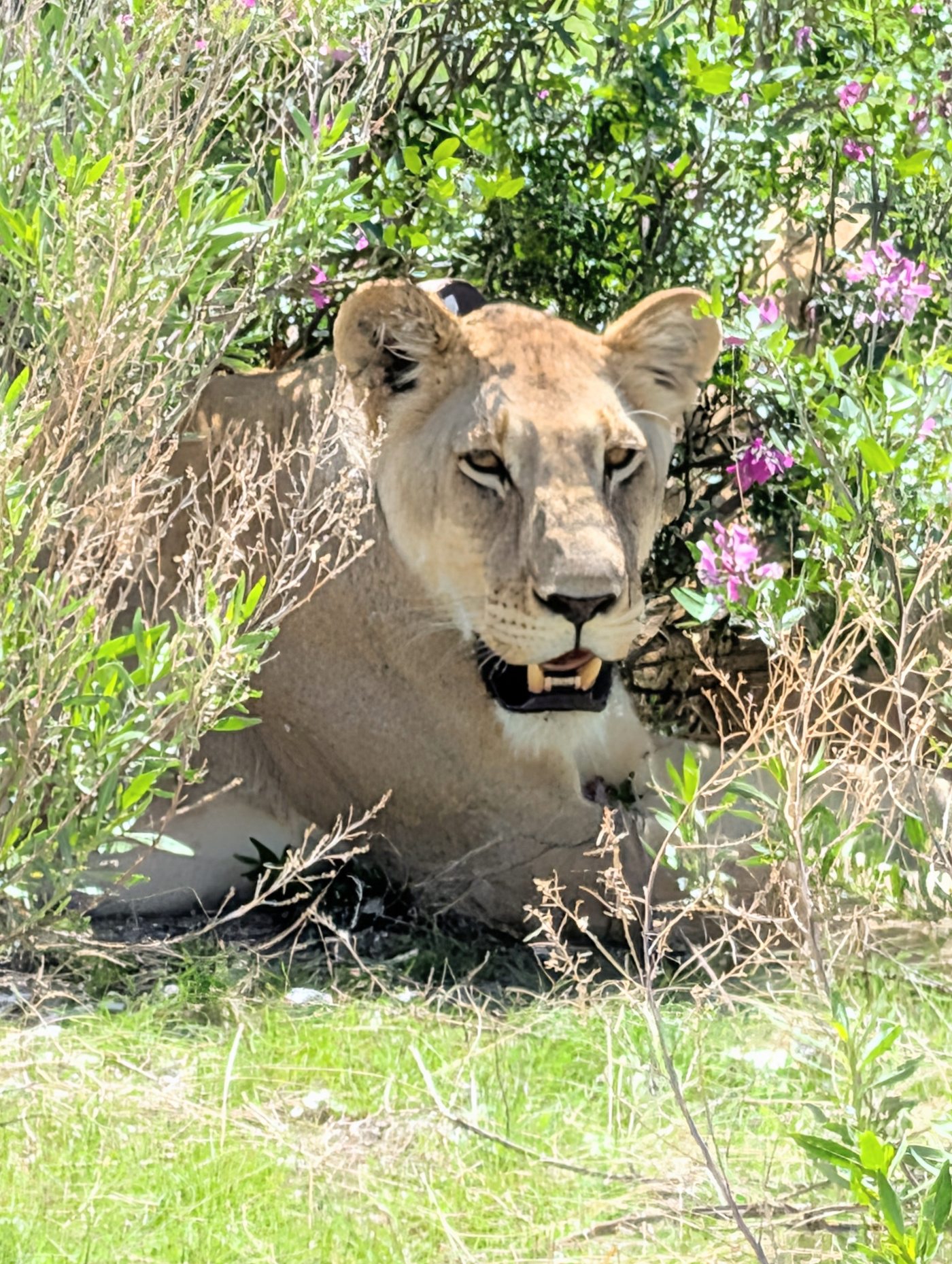
The secret to Etosha in December is simple: pull up near a natural water basin, cut the engine, and wait. You do not need to chase sightings across the dusty tracks. Over an hour, you watch a natural drama unfold: giraffes bending their long legs awkwardly to reach the water, zebra herds moving together in synchronized stripes, and prides of lions lounging in the shade of acacia trees. Patience at the water's edge is always rewarded.
Swakopmund: Where Desert Meets Ocean
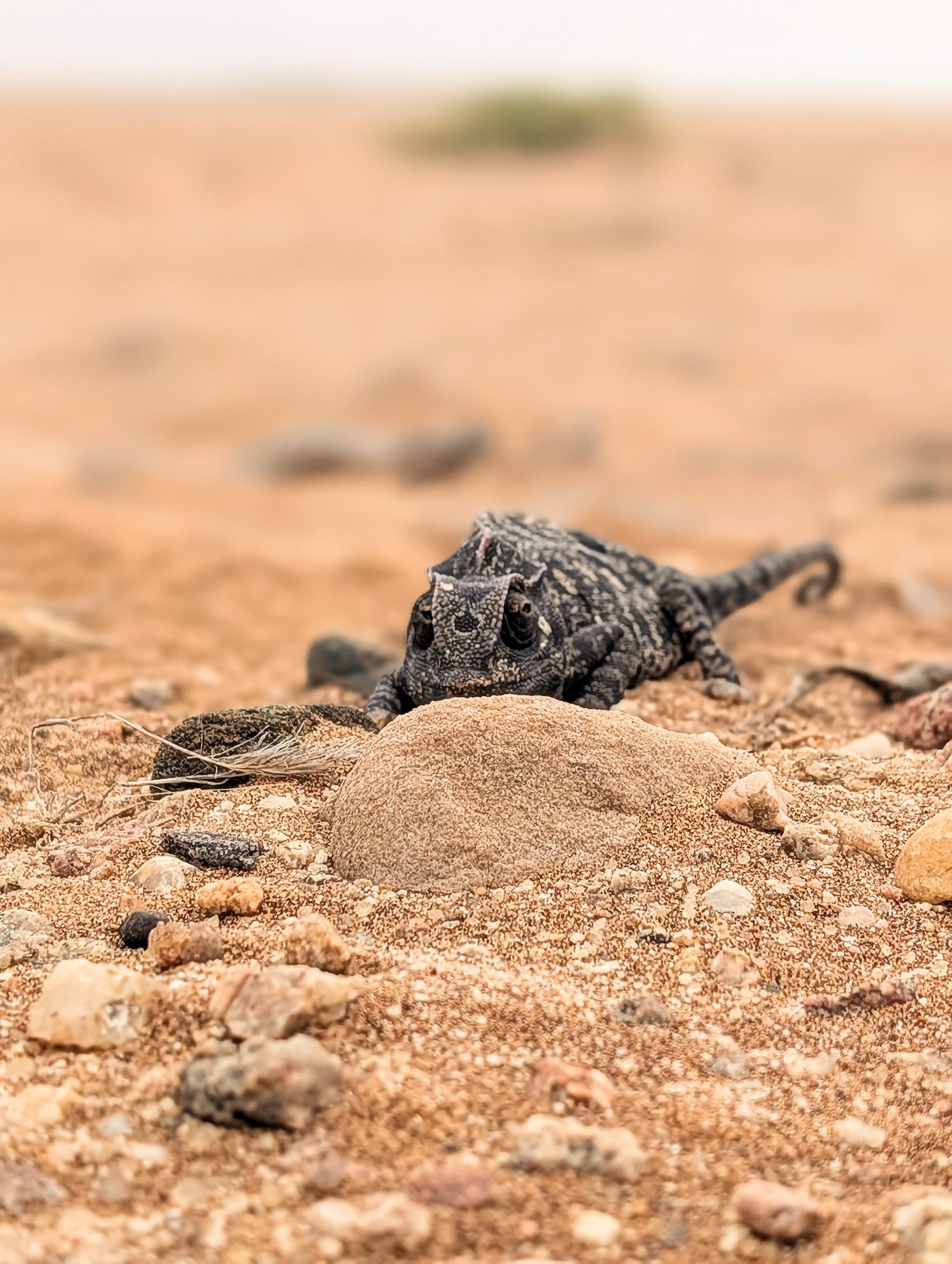
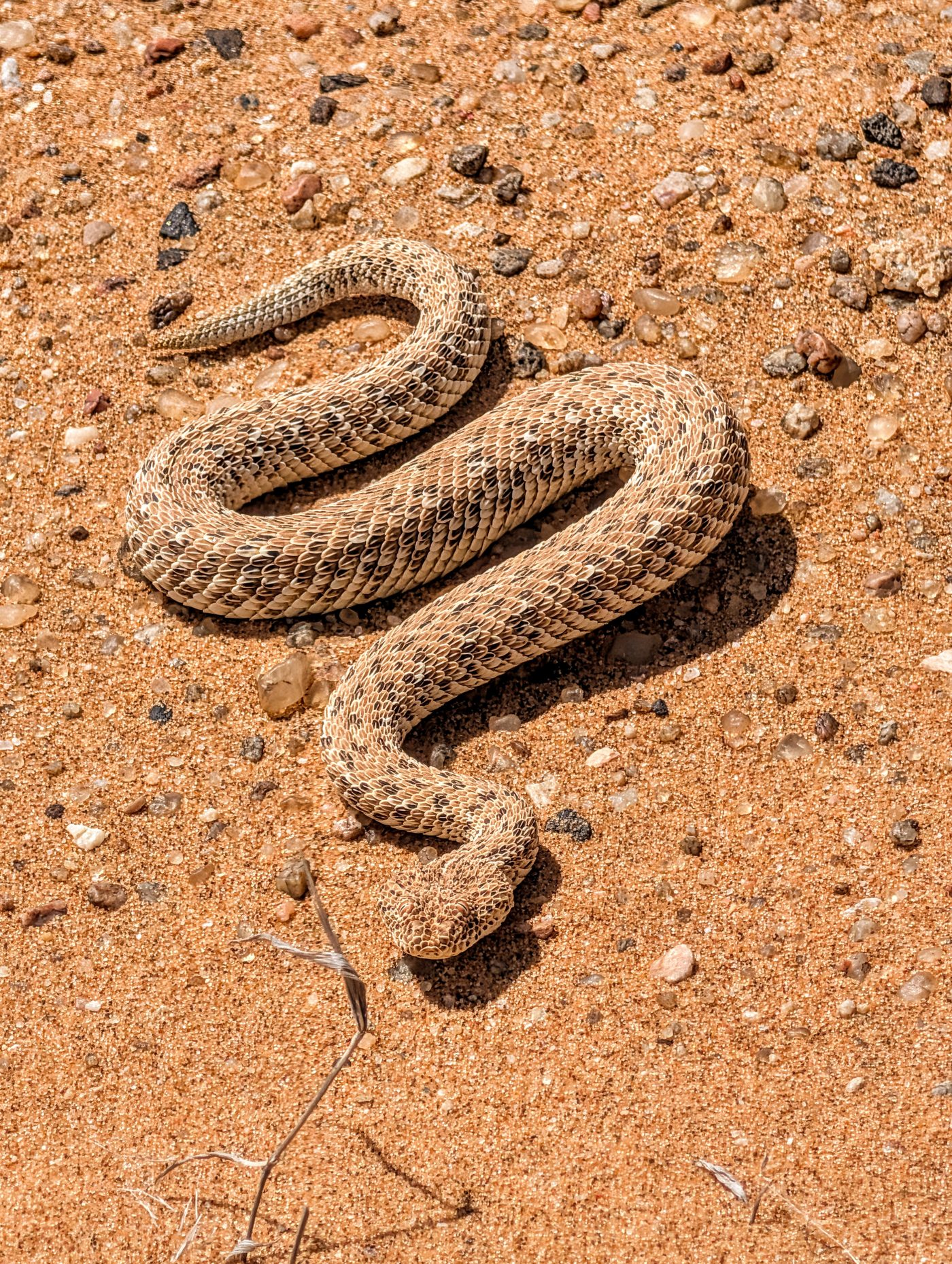
Reaching the Atlantic coast at Swakopmund brings a sudden, dramatic shift in climate. Here, the burning sands of the Namib Desert run straight into the freezing Benguela Current of the Atlantic Ocean.
As a result, thick sea fog often rolls over the town in the morning, dropping the temperature by twenty degrees and giving the German coastal streets a cool, moody atmosphere. Swakopmund is a great place to recharge: eating fresh coastal oysters and cold beer, quad-biking up oceanfront sand dunes, and watching thousands of pink flamingos gather in the shallow lagoons of Walvis Bay.
Sossusvlei: The Crimson Silence
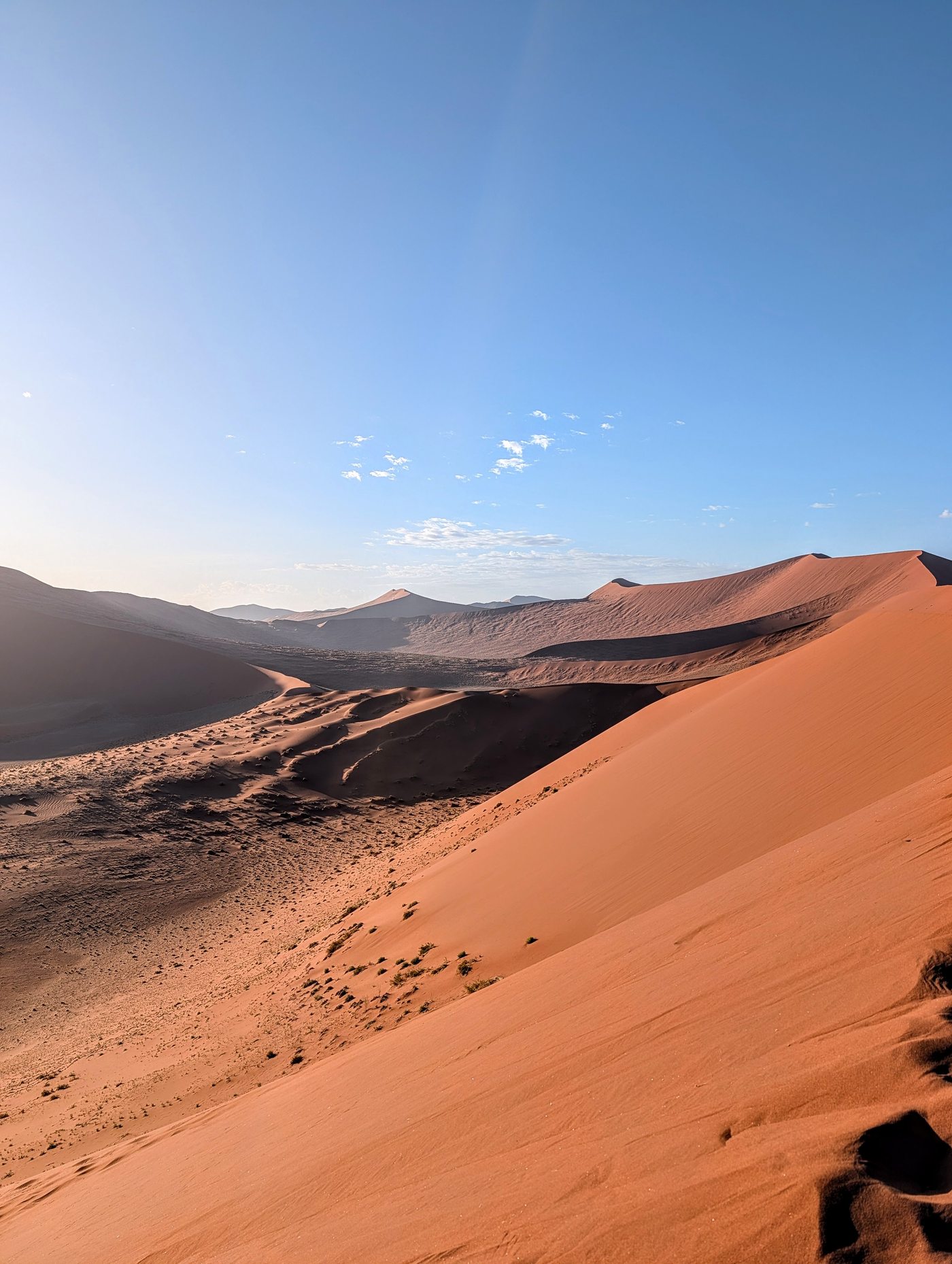
Further south in the Namib-Naukluft National Park lies Sossusvlei, home to some of the oldest and tallest sand dunes in the world. The sand here is rich in iron, oxidized over millions of years into vivid shades of burnt orange, apricot, and deep red.
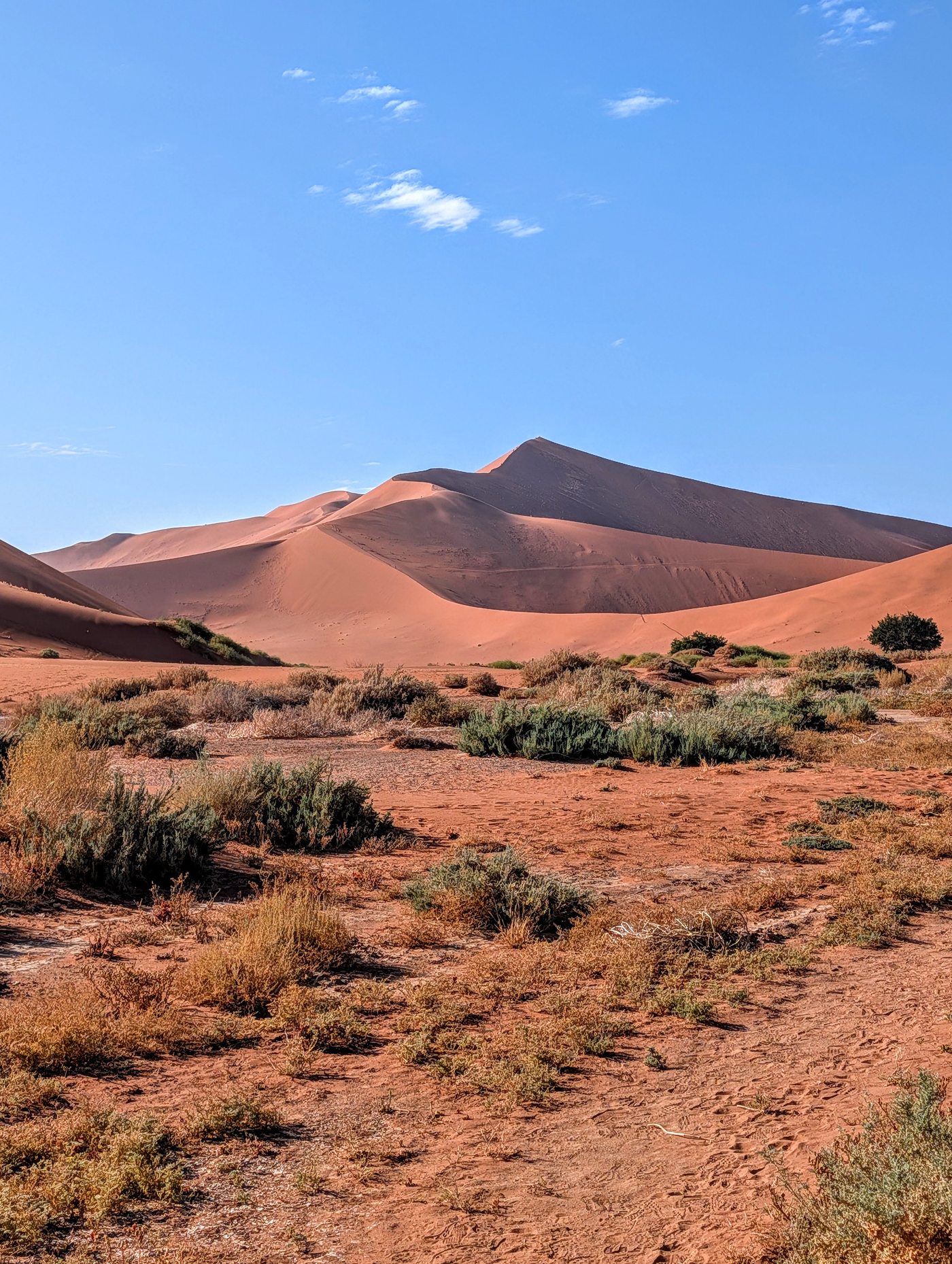
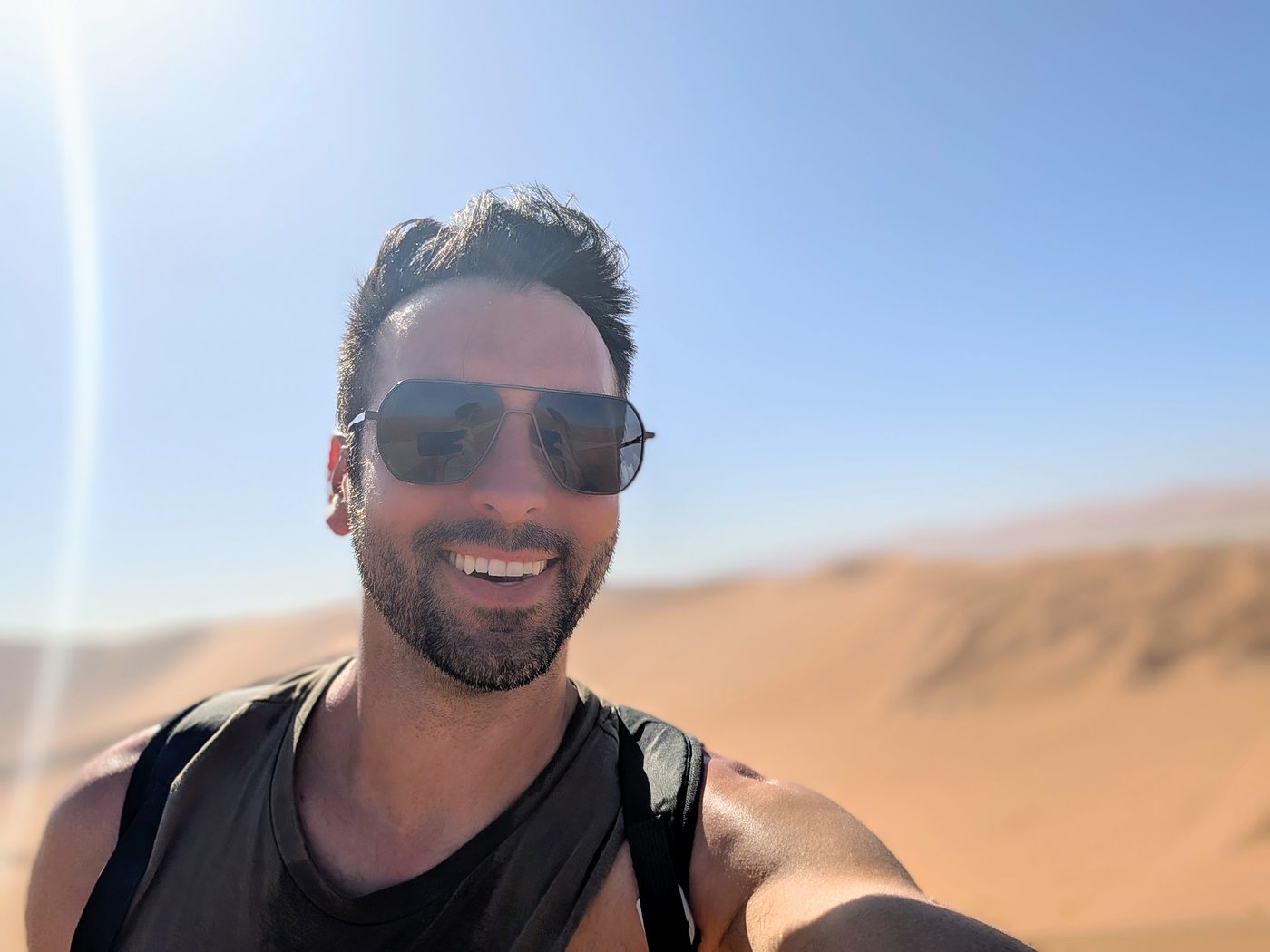
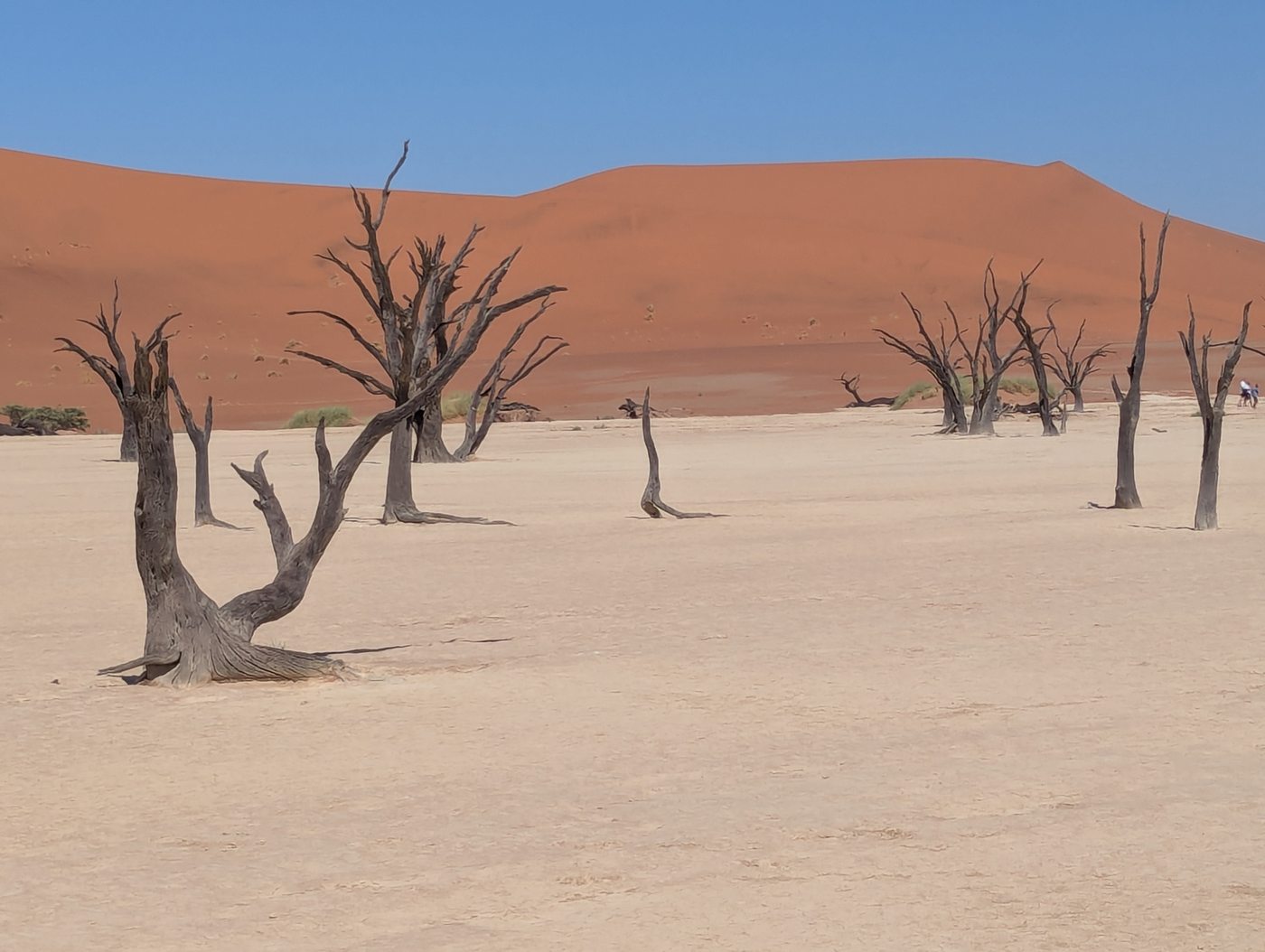
Waking up at 4:30 AM in the dark to beat the desert heat and climbing Dune 45 before sunrise is an experience you feel in your lungs and legs. As the sun crests the horizon, razor-sharp shadows divide the dunes into glowing orange and ink-black slopes. Walking into Deadvlei reveals a stark, silent world: 900-year-old dead camel thorn trees preserved by the dry desert air, standing like sculptures against blinding white clay pans and towering red dunes under an intense blue sky.
Full Circle: Back to Cape Town and the Concrete Jungle
My final stop brought me full circle back to Cape Town for a last night before taking the long flight home to the US.
Stepping back into daily life, returning to the concrete jungle, overpriced croissants, and long days spent staring into illuminated screens, the contrast was sharp. Yet after four weeks of dirt roads, campfire nights under African skies, cold ocean winds, and deep desert silence, returning to routine felt lighter. The entire four-week journey was a profound, deeply needed break, leaving me refreshed, but with a desire to travel again. Once you get that bug, it never truly leaves you.
Though, arguably, living in Miami, for many, this sounds like vacation.